

Role
Product Designer
Platform
Responsive Web App
Timeline
2025
Tools
Figma
Background
Renting in urban Nigeria is one of the most stressful financial decisions a person can make. Agents are often unverified. Fees are buried until you show up in person. Caution deposits vanish. Evictions happen without notice. And on the landlord side, the problems are just as real: tenants who damage property, disputes with no paper trail, and no system to verify who they are letting into their homes.
The rental market was not broken for lack of options. It was broken for lack of trust. HomeTrust was built to fix that.
Problem
The core issue was that both parties in a rental transaction were operating blind. Tenants had no way to verify if a listing was real, no visibility into what fees they would actually pay, and no understanding of their legal rights. Landlords had no reliable way to vet tenants or document disputes fairly.
Approach
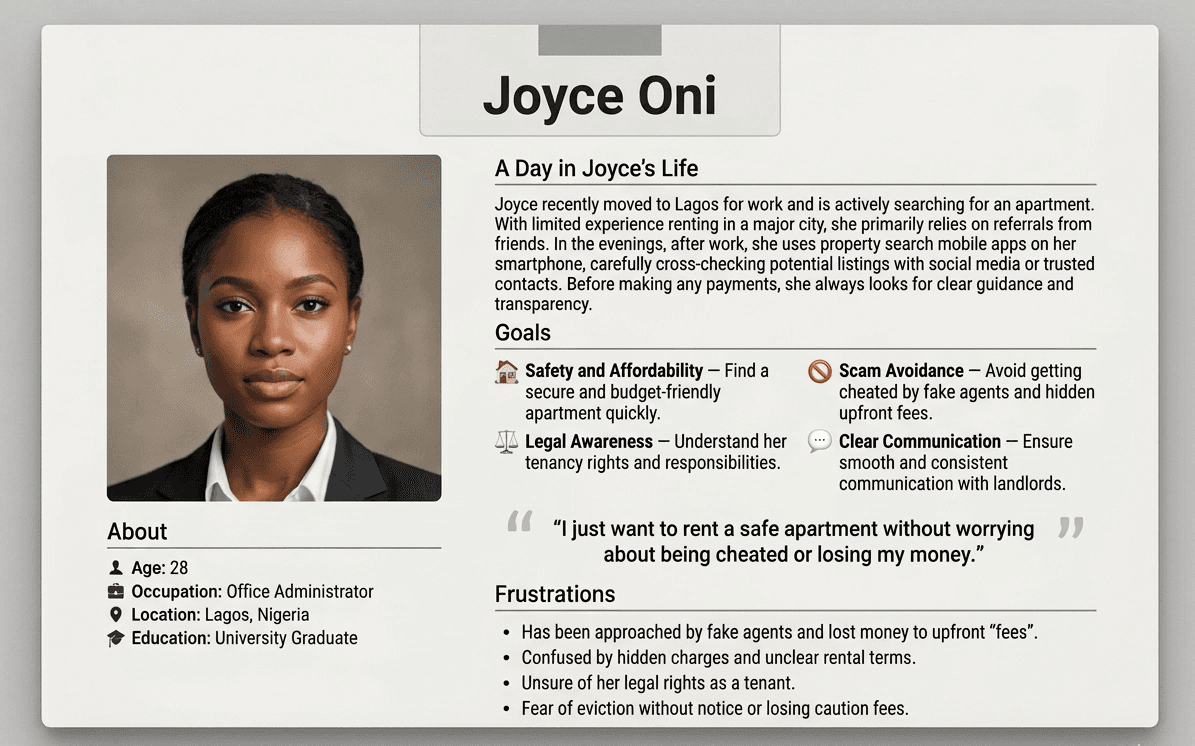
Two personas anchored the design. Joyce is a 28-year-old office administrator who recently moved to Lagos. She has already lost money to a fake agent. She wants to find safe housing without being cheated, and she needs to understand her rights before she signs anything. Mr. Adewale is a 45-year-old property owner in Abuja managing multiple units. He relies on word of mouth because he has no reliable way to vet tenants, and disputes have cost him money and time.
Neither of them needed more features. They needed one thing done with conviction: a platform they could actually trust.

The competitive review confirmed the gap clearly. PropertyPro prioritises volume over verification. Rent Small Small handles vetting itself and is limited to luxury areas. Mustard focuses on rent financing, not relationship management. None of them addressed what happens after a tenant moves in. HomeTrust focused on the full arc: search, verify, pay, move in, and move out fairly.

Solution
The design was structured to move both user types through a logical progression, build trust before any transaction begins, make every cost transparent before any money changes hands, and protect both parties long after the keys are handed over.
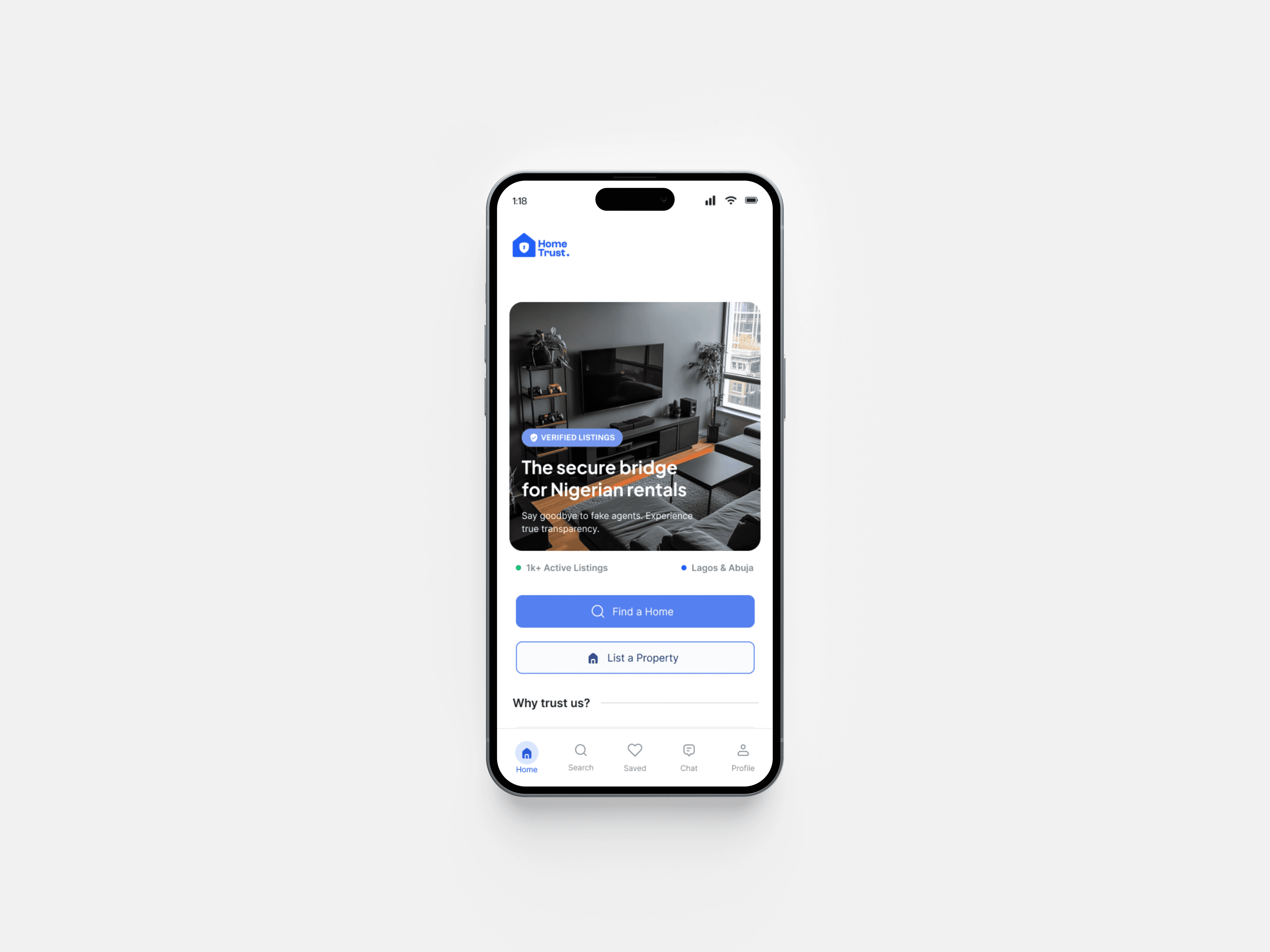
A platform that signals safety before you even sign in
The landing screen does not lead with search. It leads with a promise. "The secure bridge for Nigerian rentals. Say goodbye to fake agents." Three trust signals sit directly below: Verified Identities, Transparent Fees, Secure Deposits. This was a deliberate positioning decision. A user who arrives from a referral or social media has likely been burned before. The first screen has to earn the right for them to continue.
Listings that prove themselves
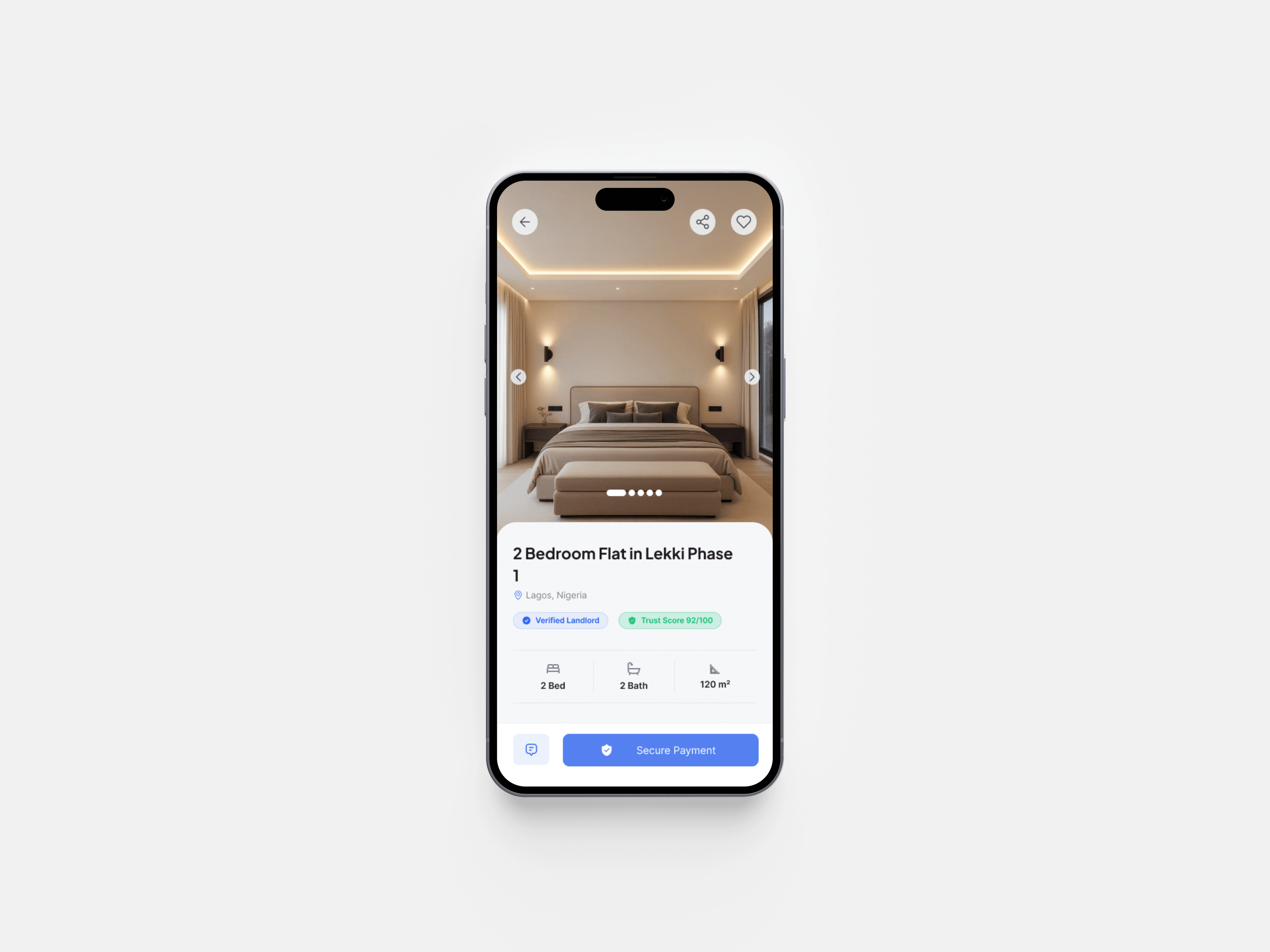
Every listing carries a Verified badge earned only after the landlord's identity has been cross-referenced with their property documents. The search feed shows price upfront, plus a clear line for agency and legal fees so there are no surprises waiting at the end. For a tenant like Joyce, this changes the emotional experience of browsing from anxiety to confidence.
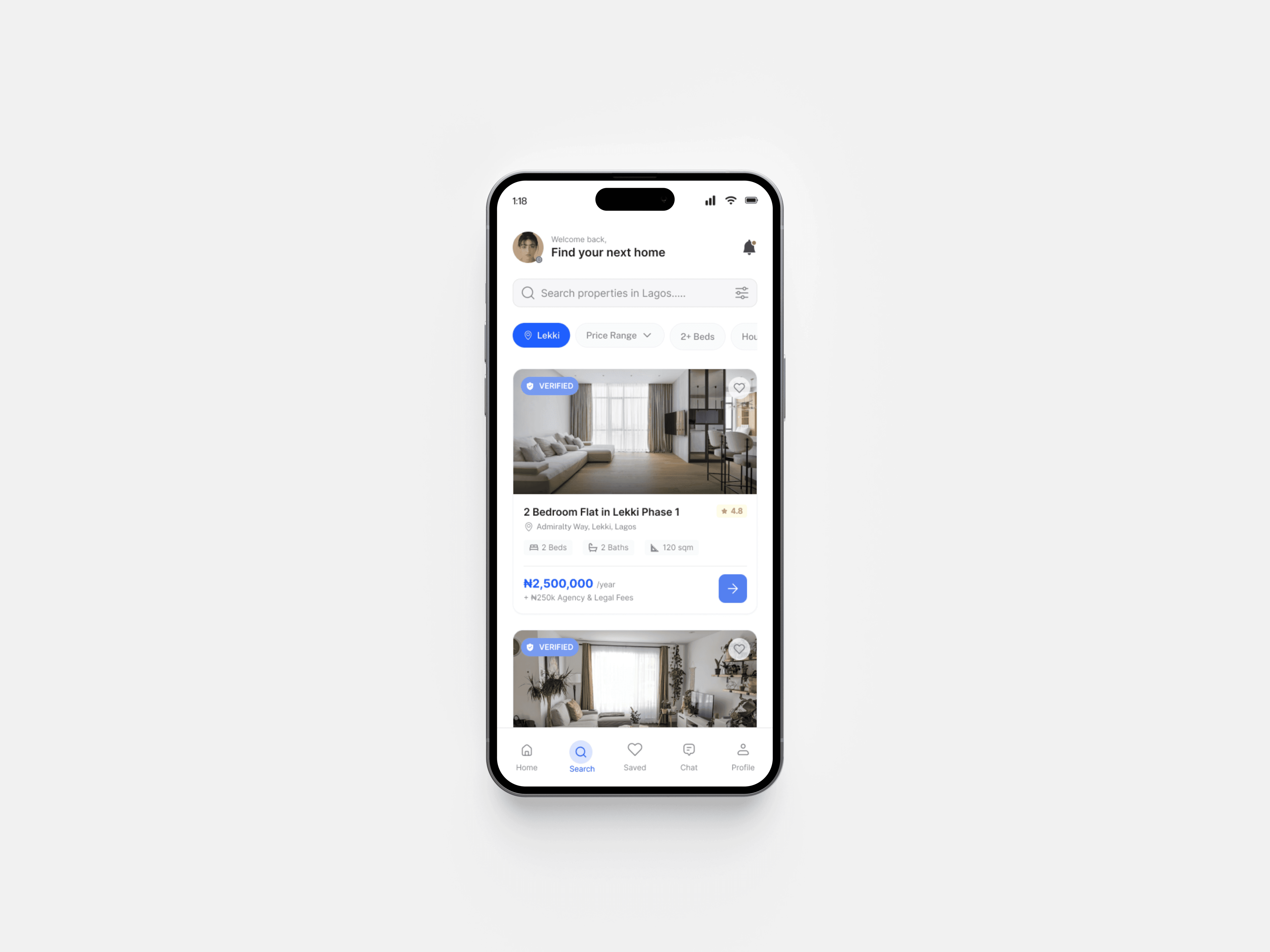
No more hidden fees
Our hypothesis was that if tenants could see the exact move-in total before clicking contact, they would be more likely to proceed and less likely to abandon after speaking to a landlord.
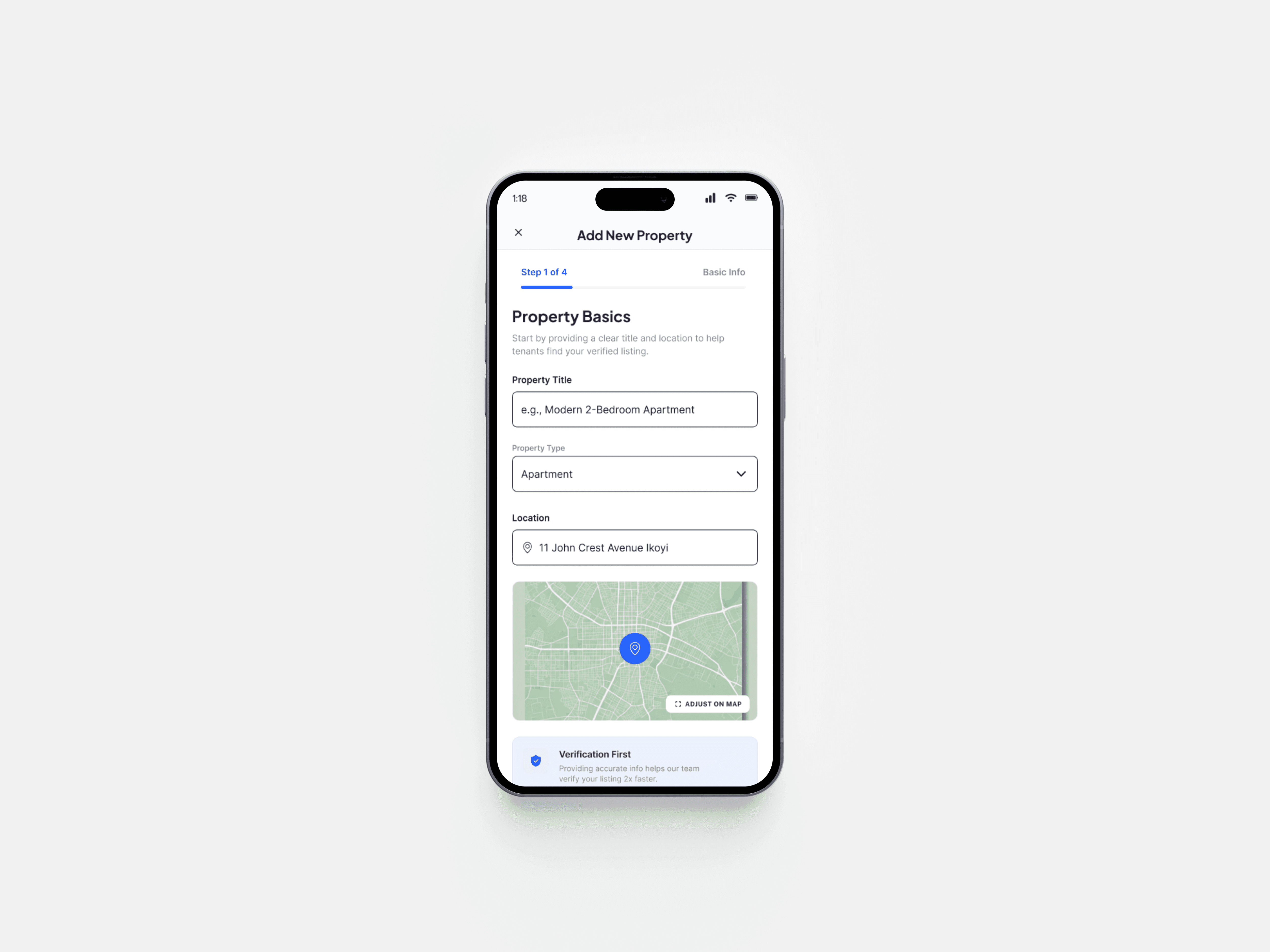
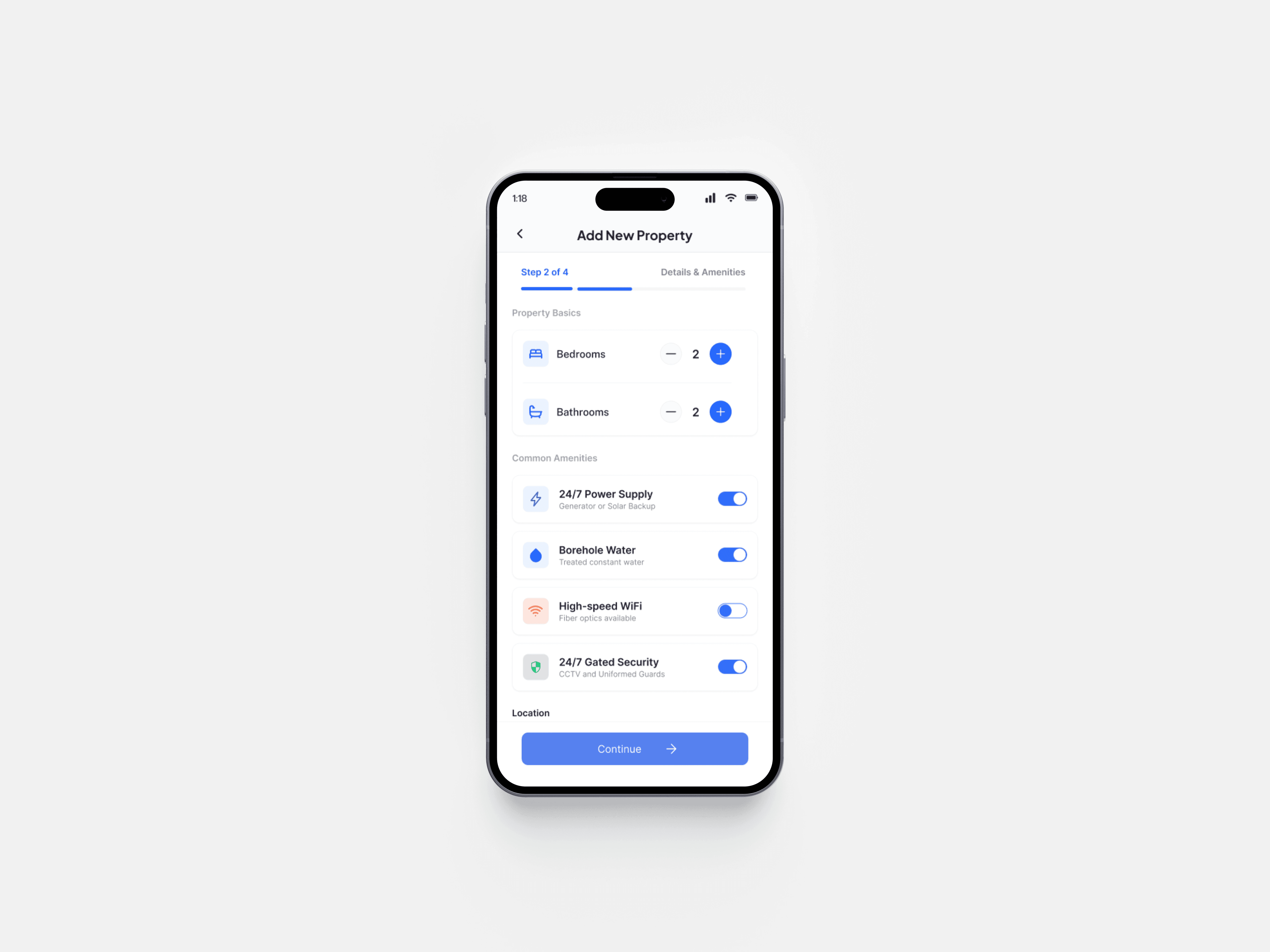
A listing flow built for landlord accountability
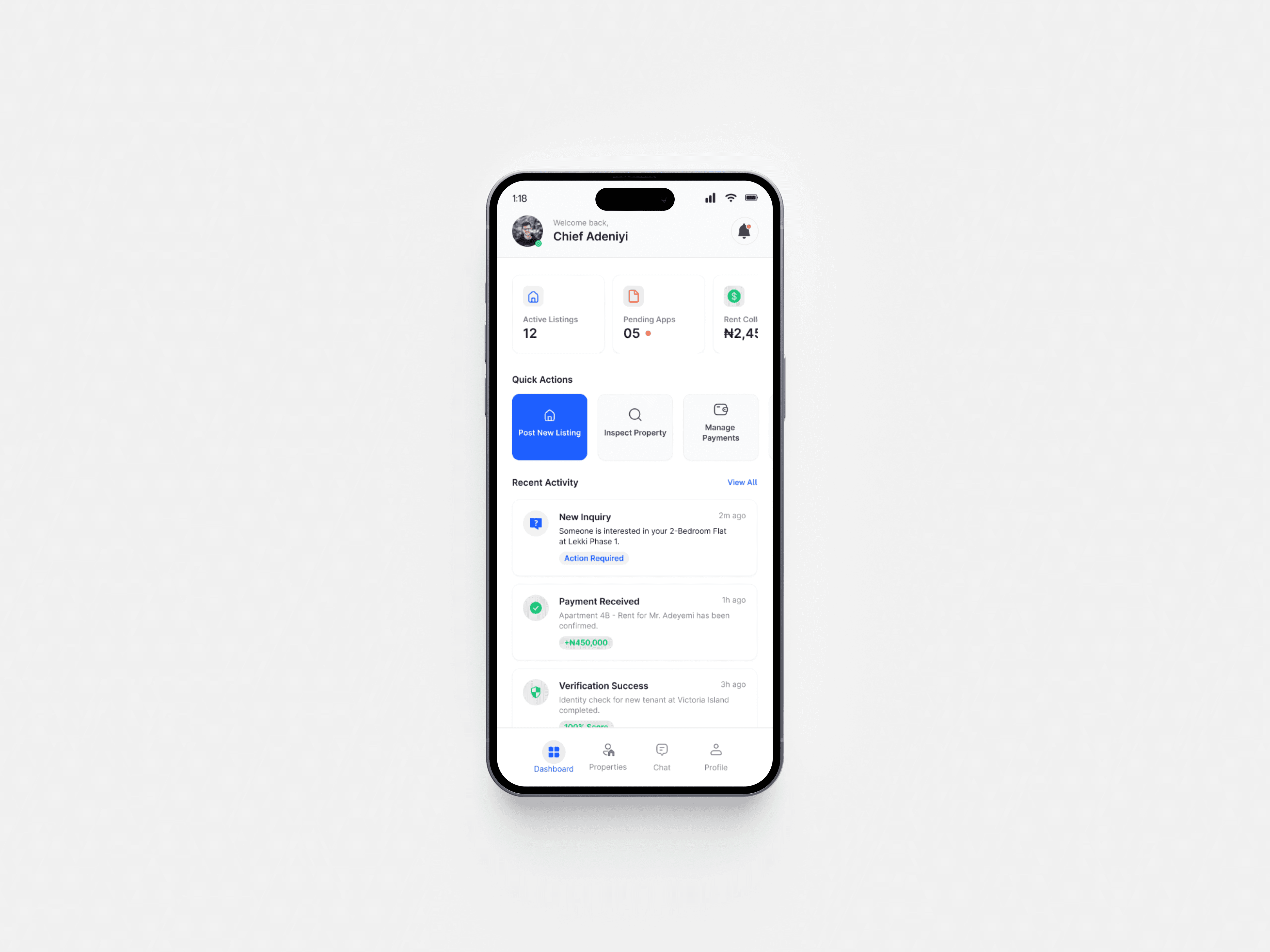
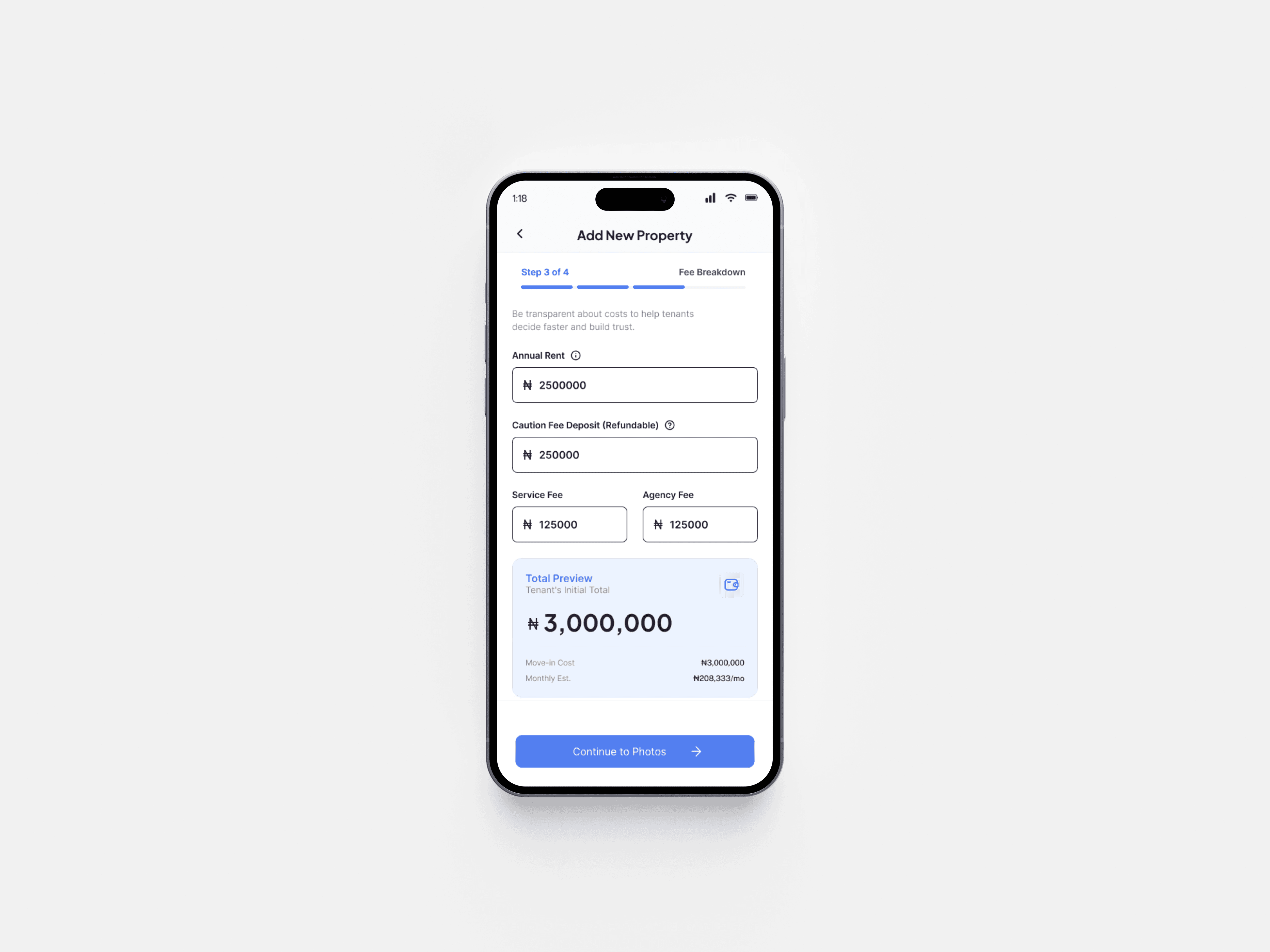
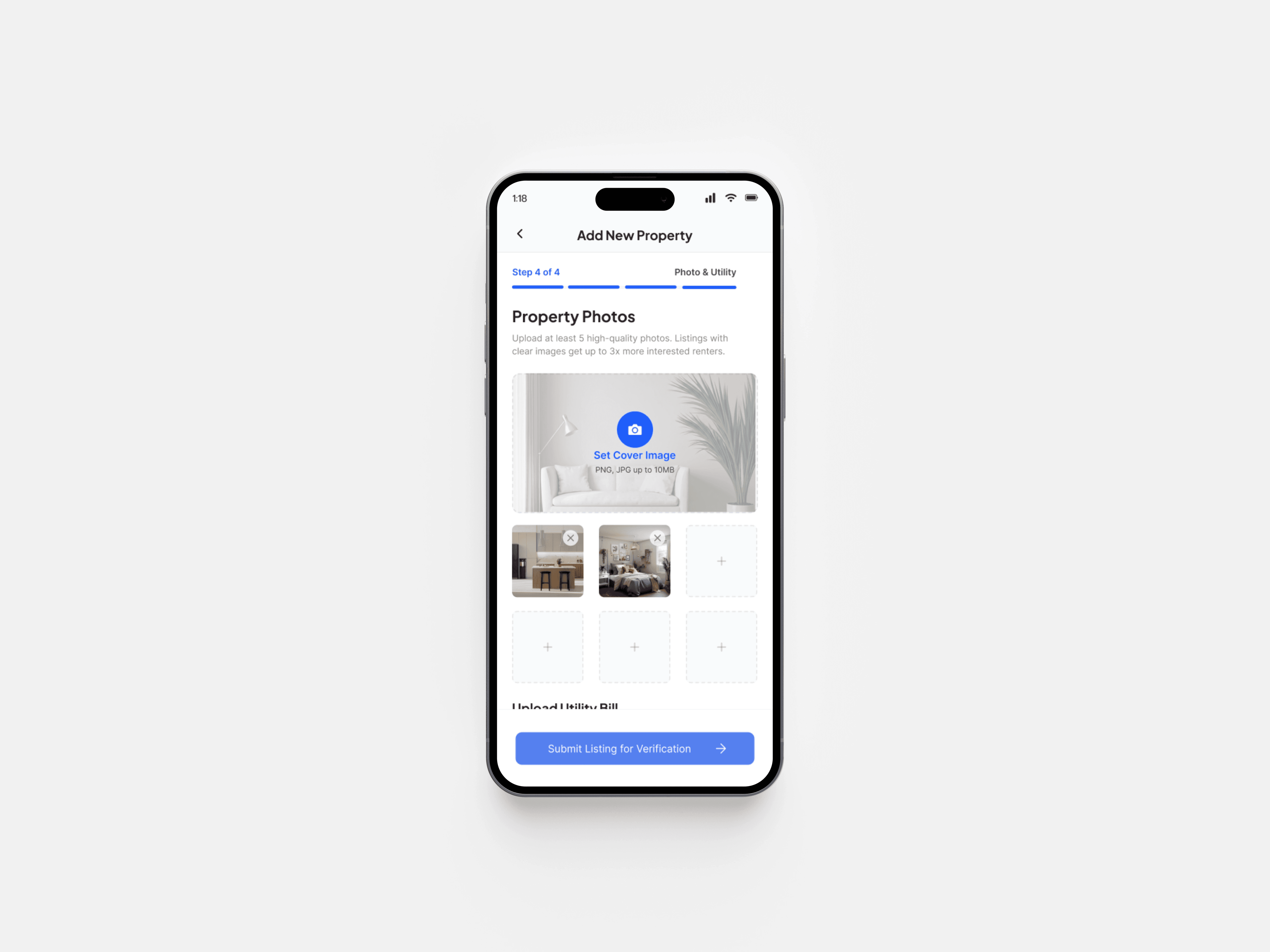
For Mr. Adewale, posting a property is not just a form; it is a verification process. The 4-step listing flow collects basic info and location, property details and amenities, a fee breakdown the landlord sets transparently, and finally photo and utility bill uploads for AI-assisted ownership verification. The system holds the listing in a pending state until verification passes. Verified listings get 3x more views, which gives landlords a clear incentive to be thorough and honest.
Paying with confidence
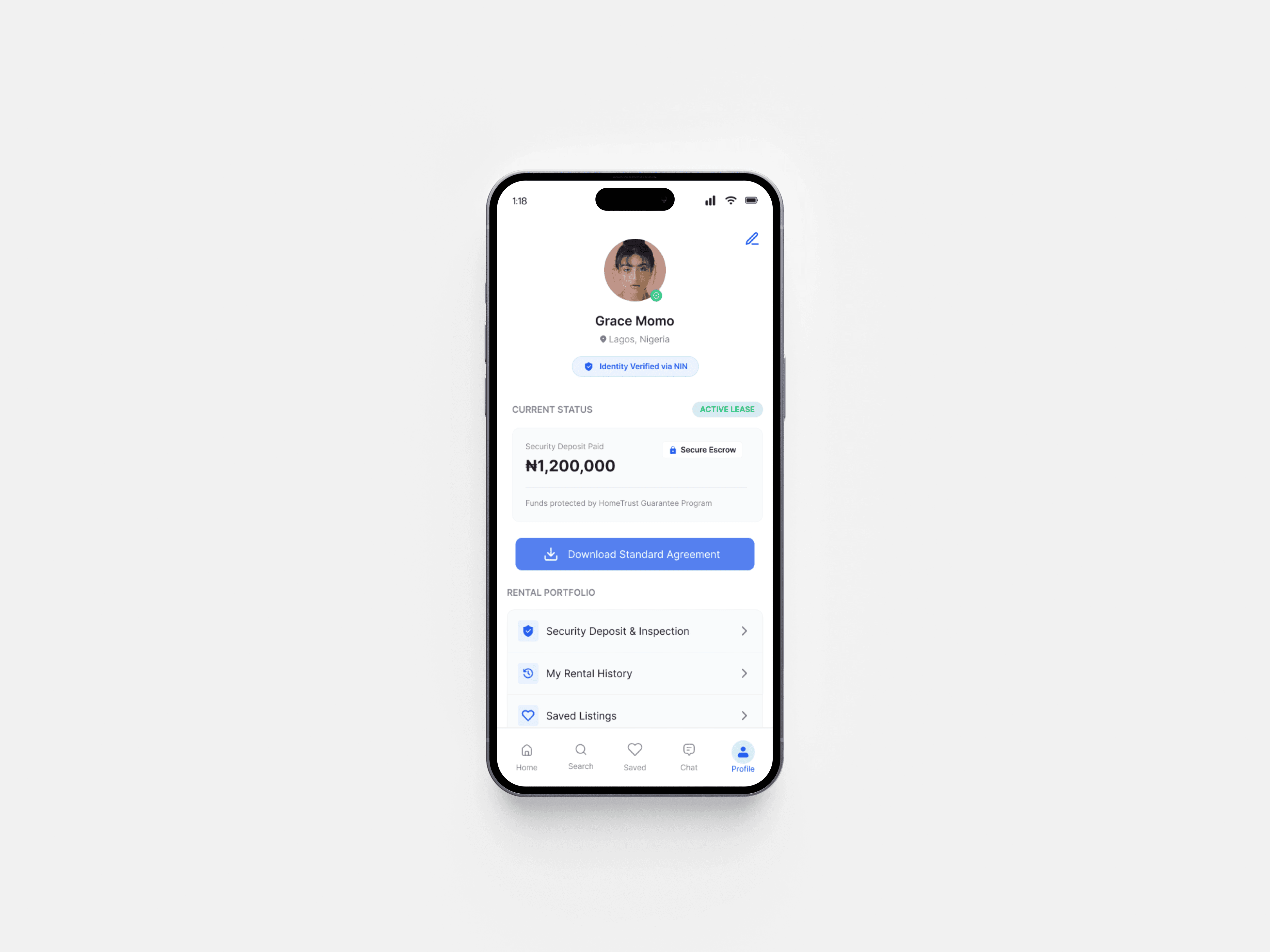
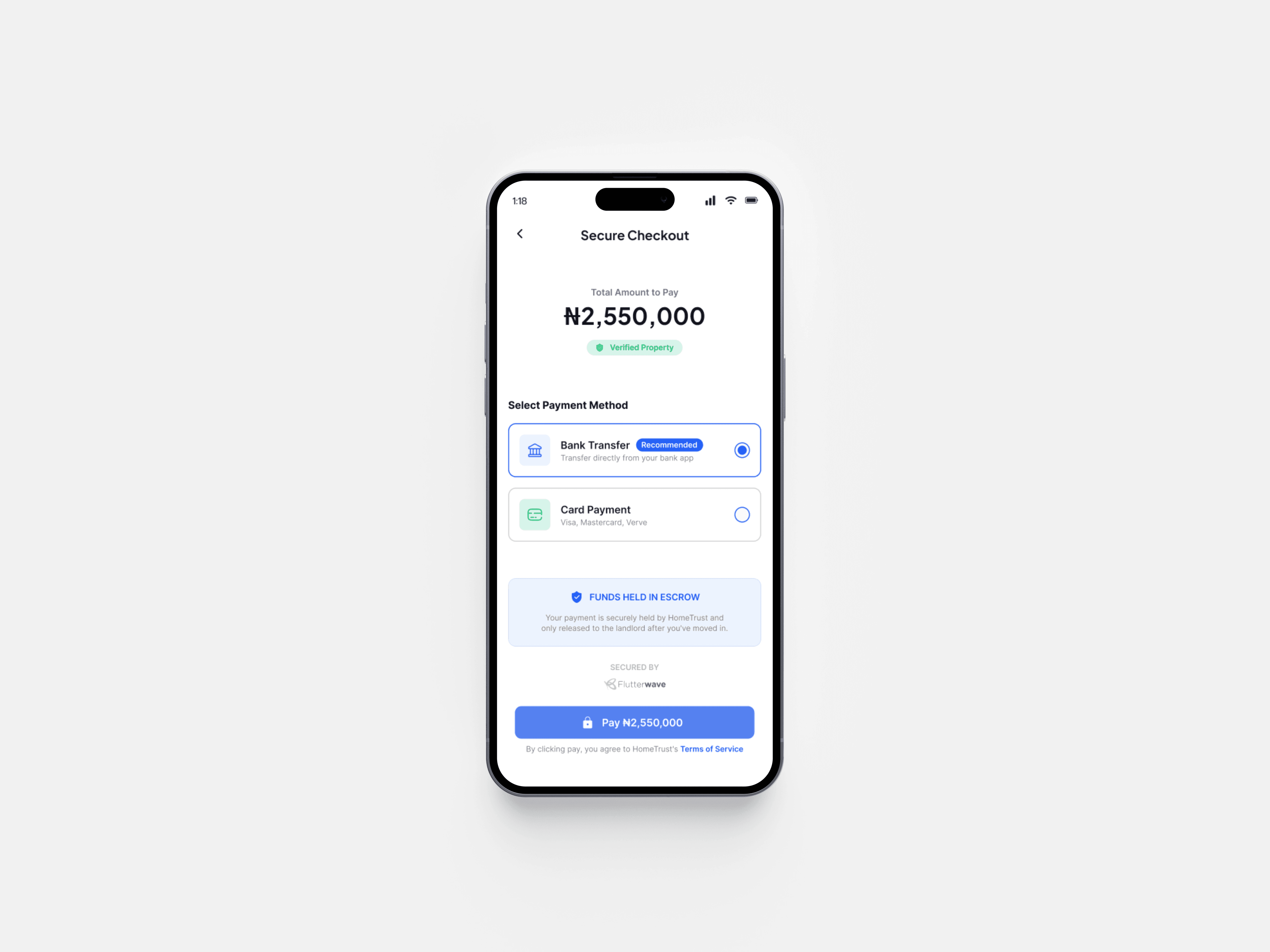
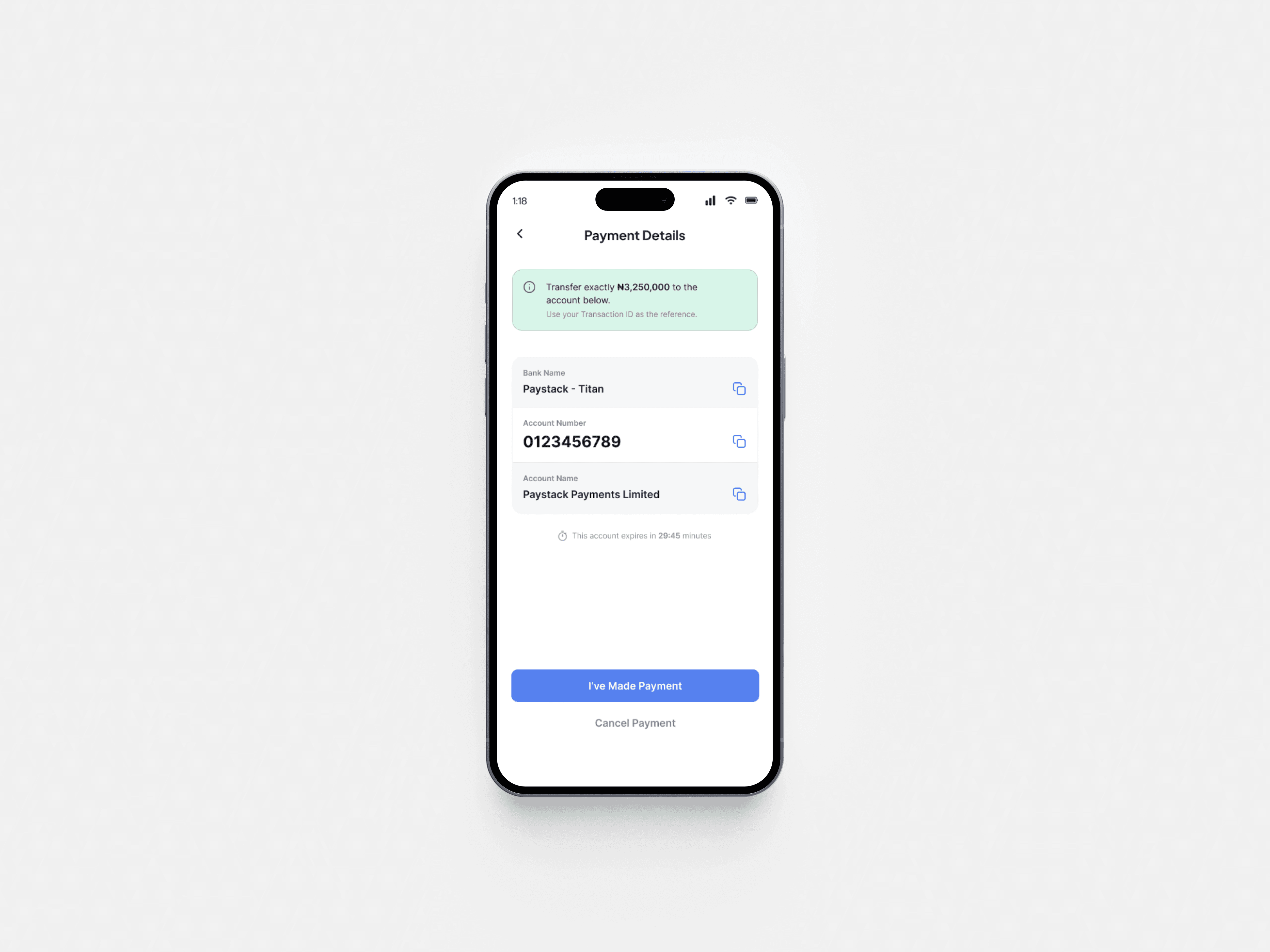
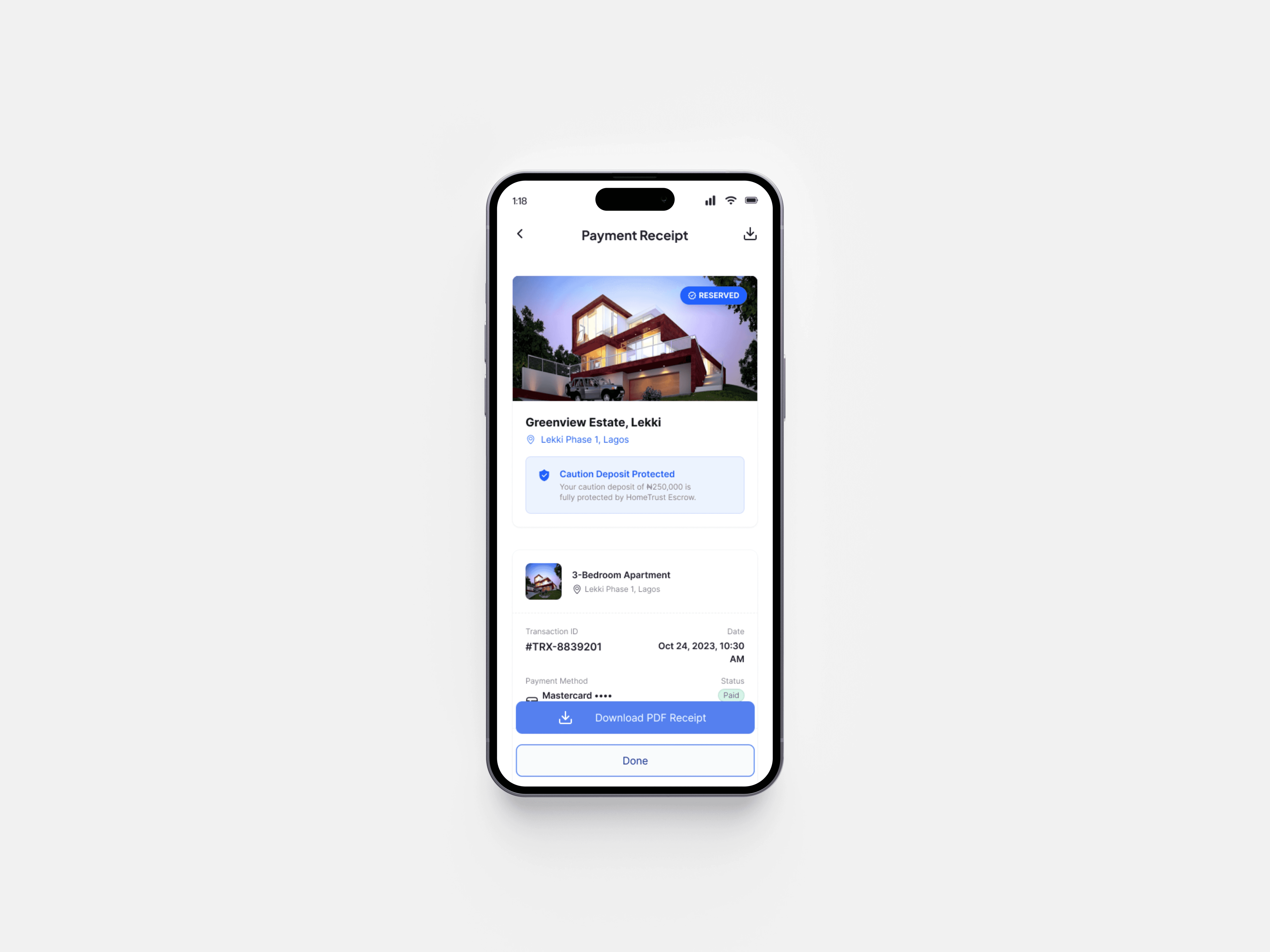
The checkout flow carries a single most important message throughout: your money does not go to the landlord until you have moved in. The escrow model is surfaced at every step on the checkout screen, on the bank transfer screen, and on the payment receipt, where the caution deposit is explicitly labelled "Held in Escrow." The receipt includes a unique Transaction ID and a downloadable PDF. For a user who has lost money to a fake agent before, this level of paper trail is not a feature; it is the product.
Know your rights before you sign
Before a tenant can complete payment, they must read the HomeTrust Tenancy Rights Guide. The scroll-to-end requirement is not punitive, it is protective. The guide covers fundamental protections, statutory notice periods under Nigerian law, receipt rights, and eviction rules in plain, accessible language.

Protecting deposits after move-in
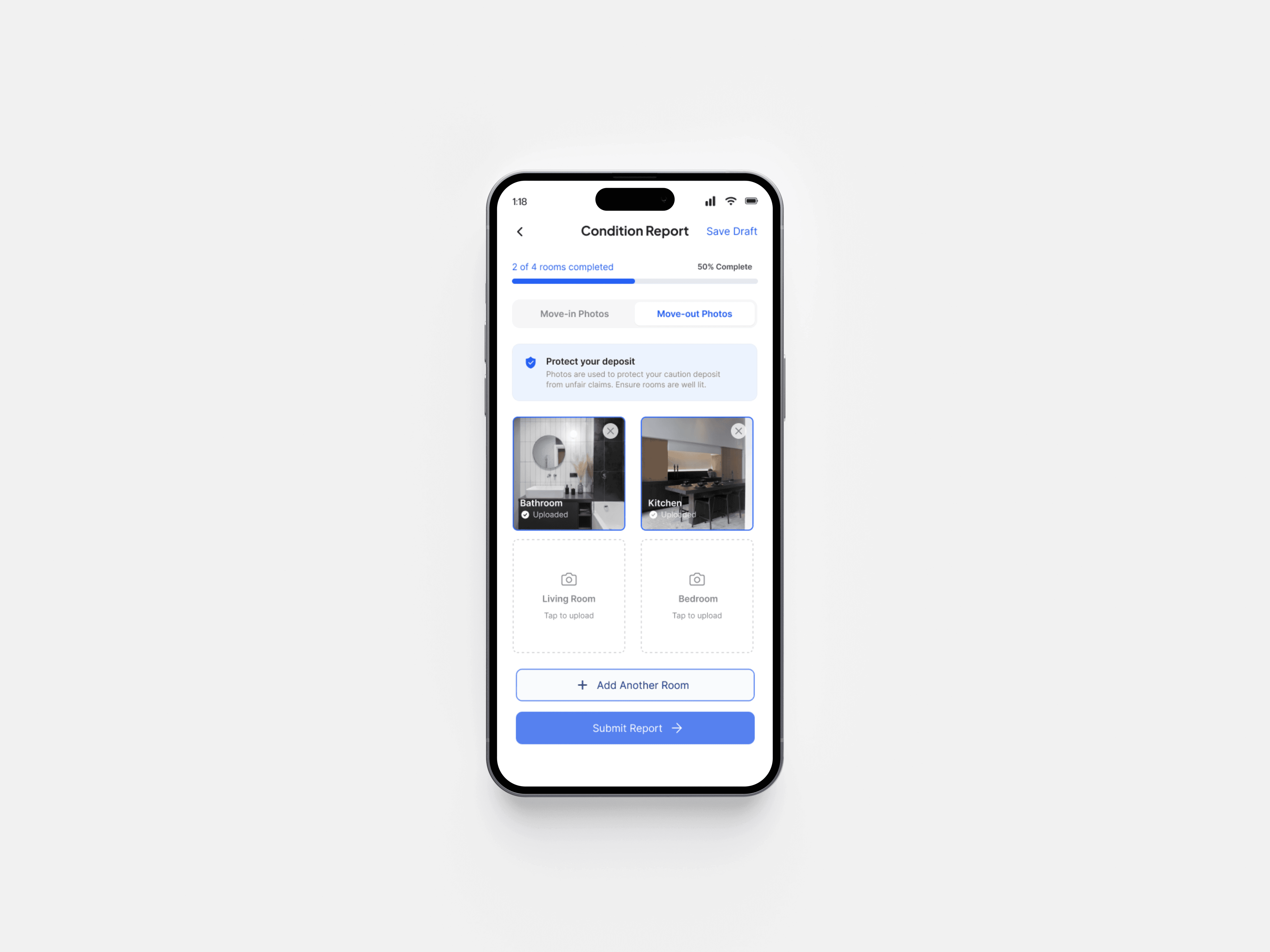
Most rental disputes in Nigeria start after the tenant moves out. HomeTrust addresses this by creating a digital paper trail from day one. The Condition Report screen lets tenants photograph each room at move-in. The move-out review screen puts move-in and move-out photos side by side in compare mode so any damage claims are grounded in evidence, not argument.

Outcomes
Against direct competitors, HomeTrust was the only platform to combine identity verification, upfront fee transparency, escrow-protected payments, tenancy rights education, and digital deposit tracking in a single experience built for both sides of the rental relationship.
Learnings
The biggest design decision on this project was treating trust as a feature, not a value. Every screen had to do work to earn it. The Verified badge, the escrow label, the side-by-side photo comparison none of these are decorative. They are functional trust signals that replace the informal, word-of-mouth systems that currently hold the rental market together.
The scroll-to-end tenancy rights requirement was the most debated interaction in the project. It adds friction. But it is friction with a purpose, it ensures that tenants who have historically been most vulnerable in this market cannot skip over the knowledge that protects them. That tradeoff was worth making.
If pushed further, the next step would be usability testing with real tenants and landlords in Lagos and Abuja to validate how the verification flow performs under real network conditions and with real government ID documents. That data would sharpen the most technically complex part of the product.
Other Projects

Powerwise
Designed a platform to track usage, prevent outages, and enable secure payments.
UI/UX Design
UX Research
