

Role
Product Designer, Brand Design
Platform
iOS Mobile App
Timeline
2025
Tools
Figma, FigJam, Notion
Background
In many Nigerian households, electricity bills arrive once a month with no context. You pay, forget, and then the next one lands higher than expected. No warning. No explanation.
This was a visibility problem. People had no way to engage with their energy consumption between cycles, so they had no real power over it. PowerWise set out to change that.
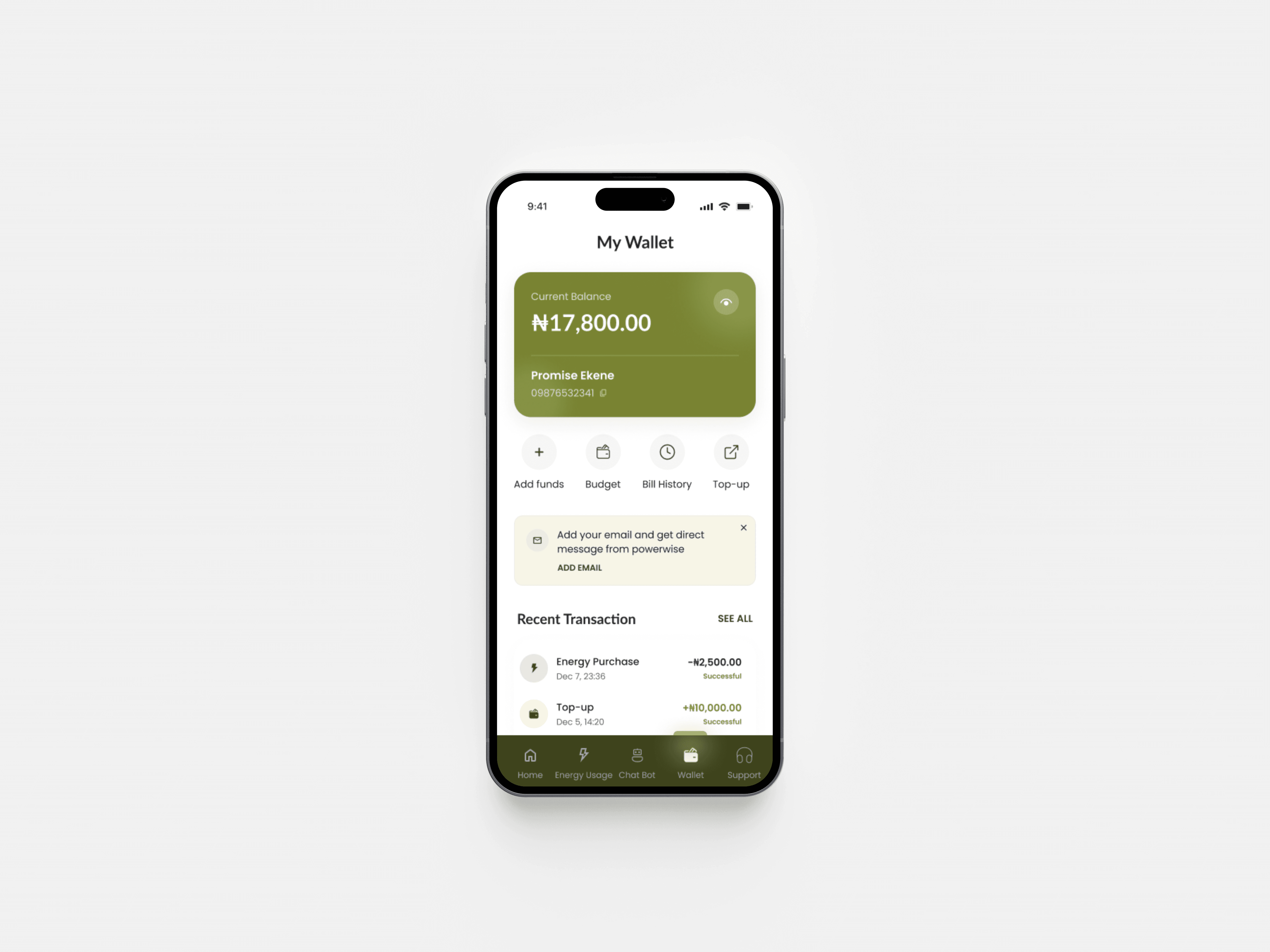
Problem
Electricity is used constantly but thought about almost never until a bill arrives that makes no sense. Three numbers surfaced consistently across every interview.
89% had no idea how much electricity they were consuming in real time.
74% had received an unexpectedly high bill in the past year.
82% said they'd actively use alerts if available on their phone.
The demand was there. The product wasn't. Most competitors offered monthly data at best, locked behind desktop portals nobody opened.
Approach
I ran qualitative interviews across renters, family homes, and solo professionals. What came out wasn't just frustration about money, it was about trust. People felt structurally excluded from data they were paying for every month.
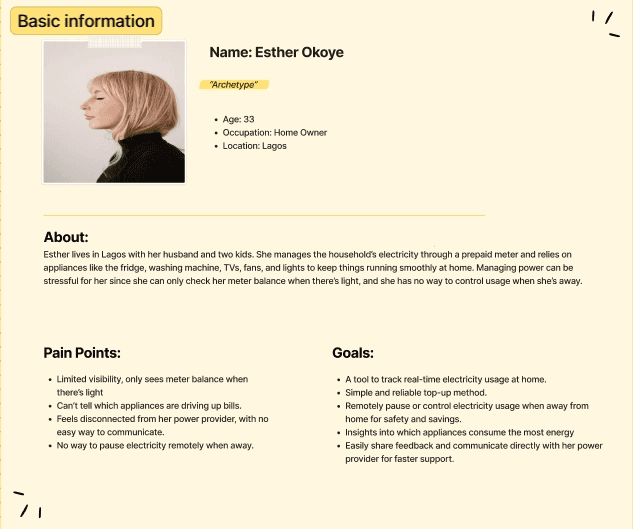
Empathy mapping surfaced four consistent pain points: unexpected bills with no root cause, powerlessness between cycles, no confidence habit changes were working, and data that felt invisible.
Three personas shaped the design directi


Solution
The product had to deliver three things at once: real-time visibility, a usable budget and alert system, and plain-language insights. A competitive review confirmed no mobile-first product was doing all three. That gap was where PowerWise had room to live.

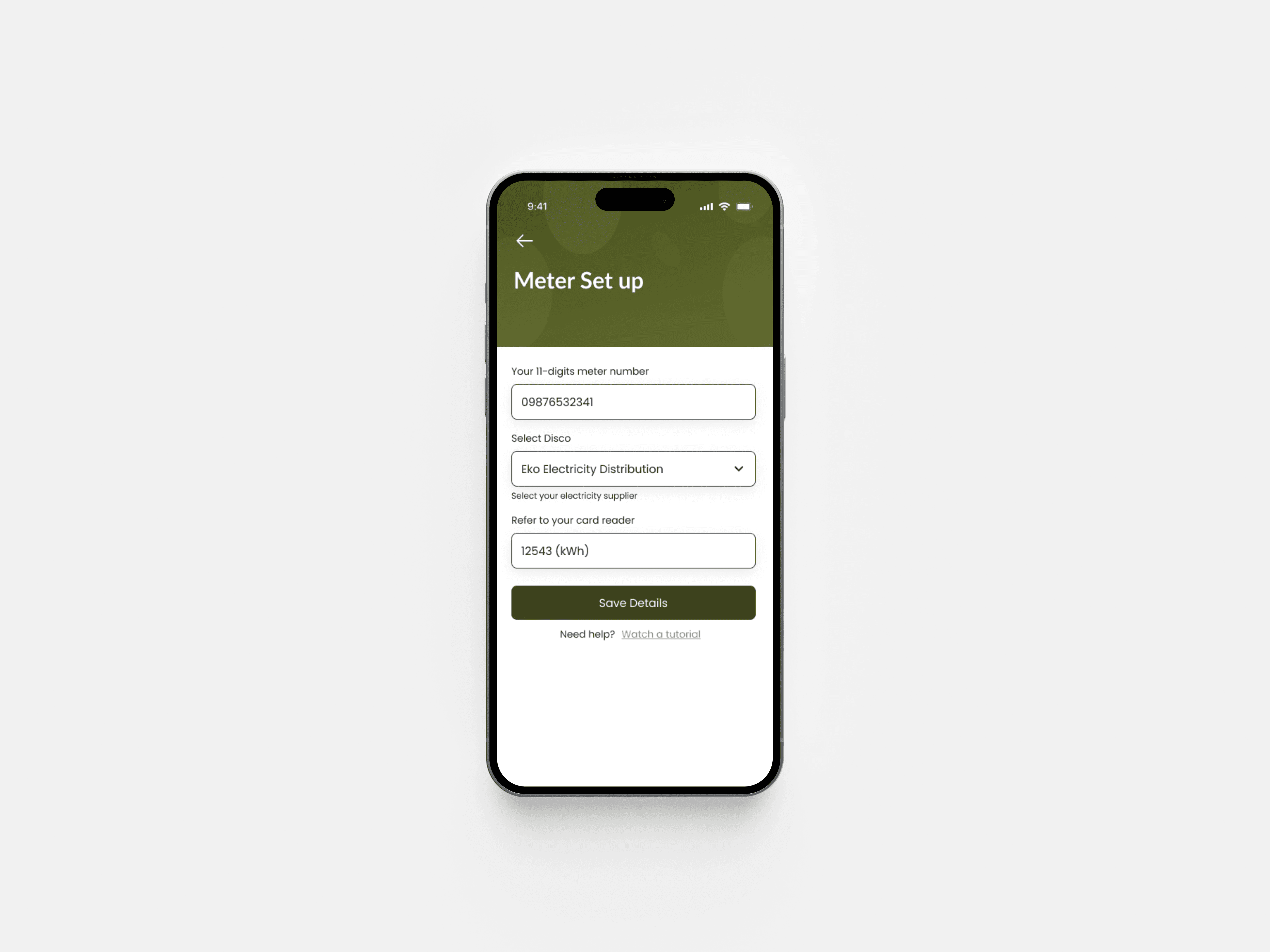
Getting started
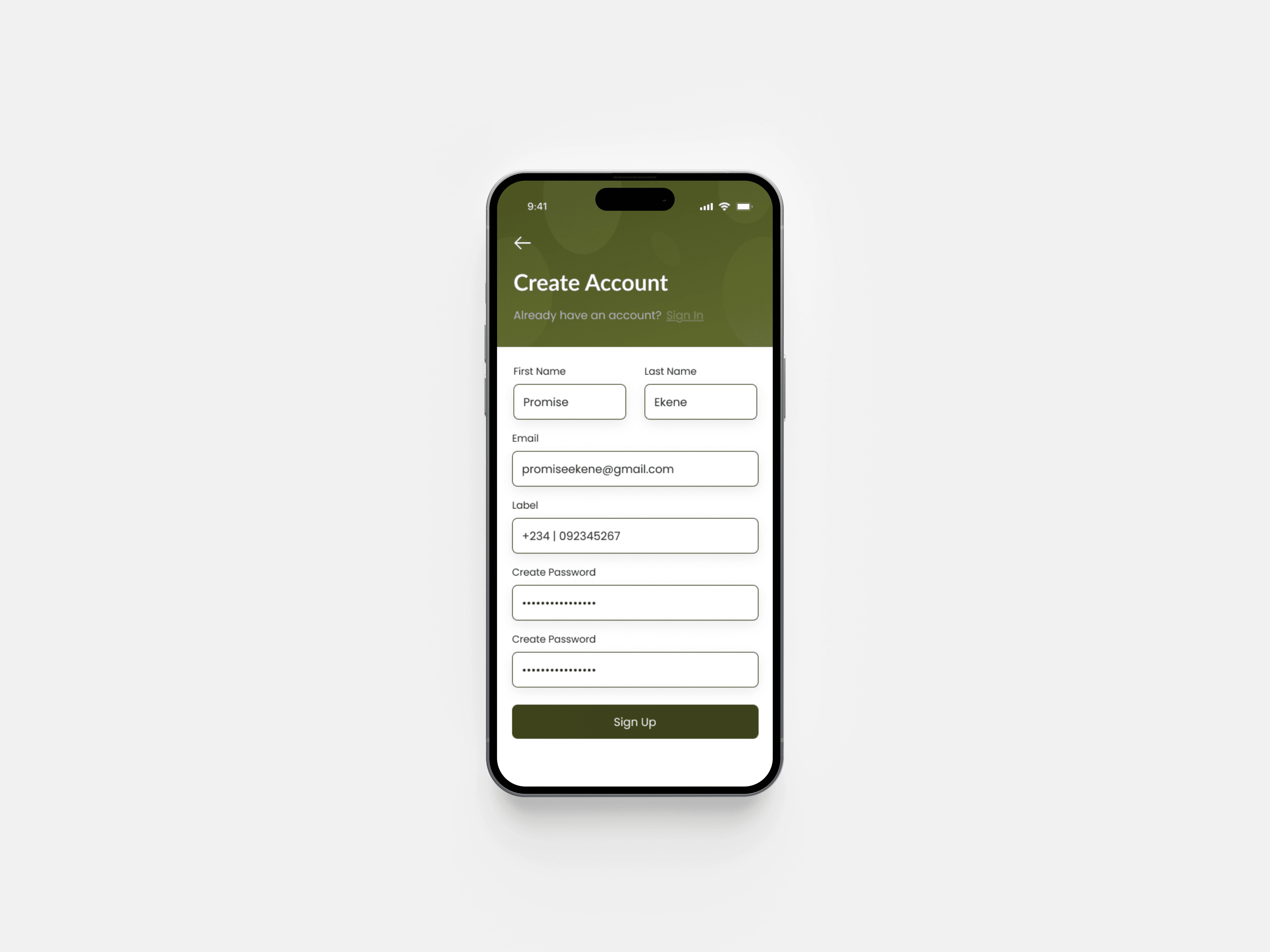
Our hypothesis was that if users defined their budget and alert thresholds on day one, they'd feel a sense of ownership before they ever opened the main app. The onboarding flow asks only what it needs, nothing more. Short, friendly, and done in under two minutes.
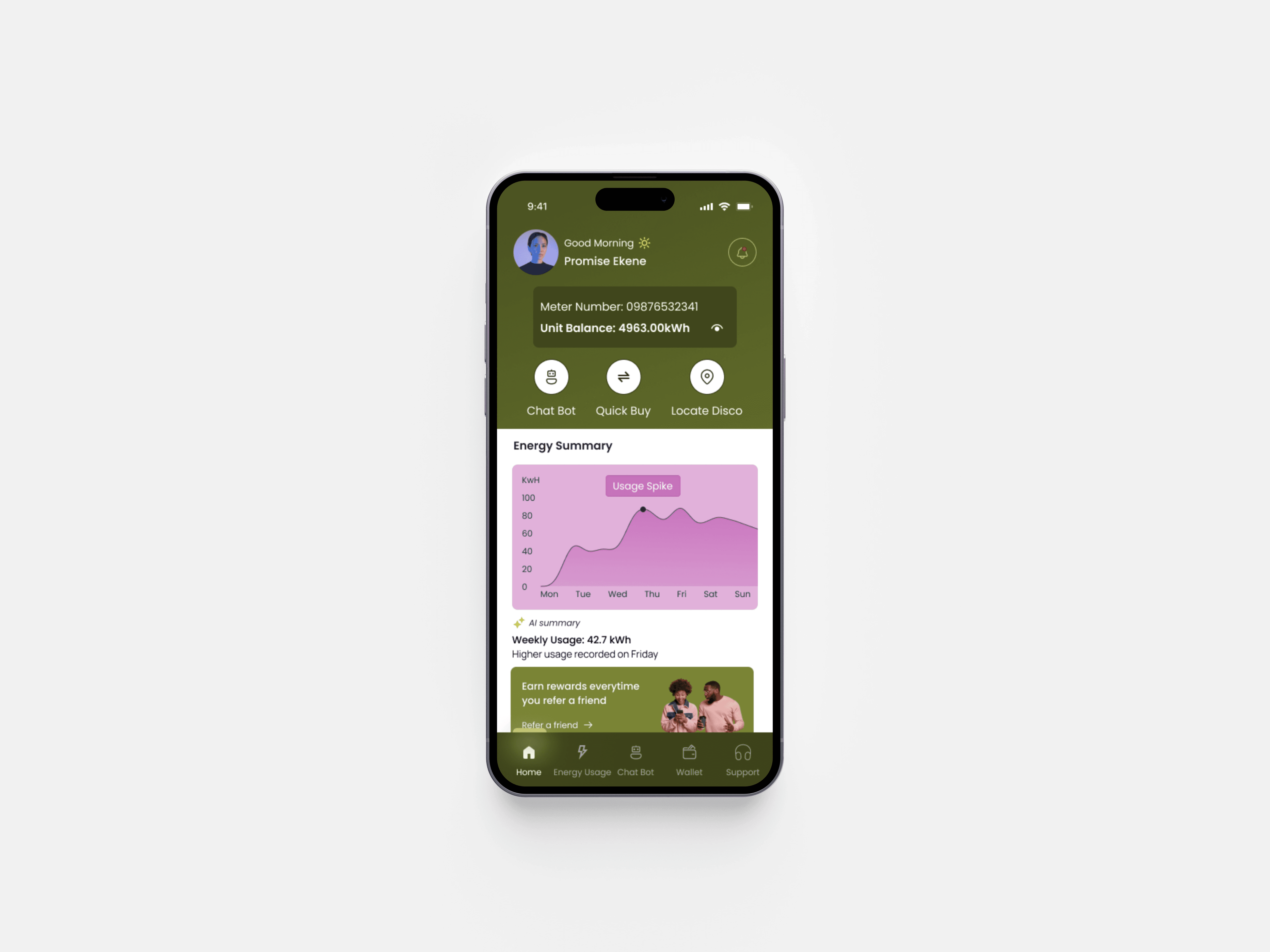
A home base worth returning to
The dashboard needed to answer one question instantly: am I on track? A single prominent usage figure, a budget progress bar, and a running bill estimate live together on one screen. No scrolling. No mental math. The most important number is always the first thing you see.
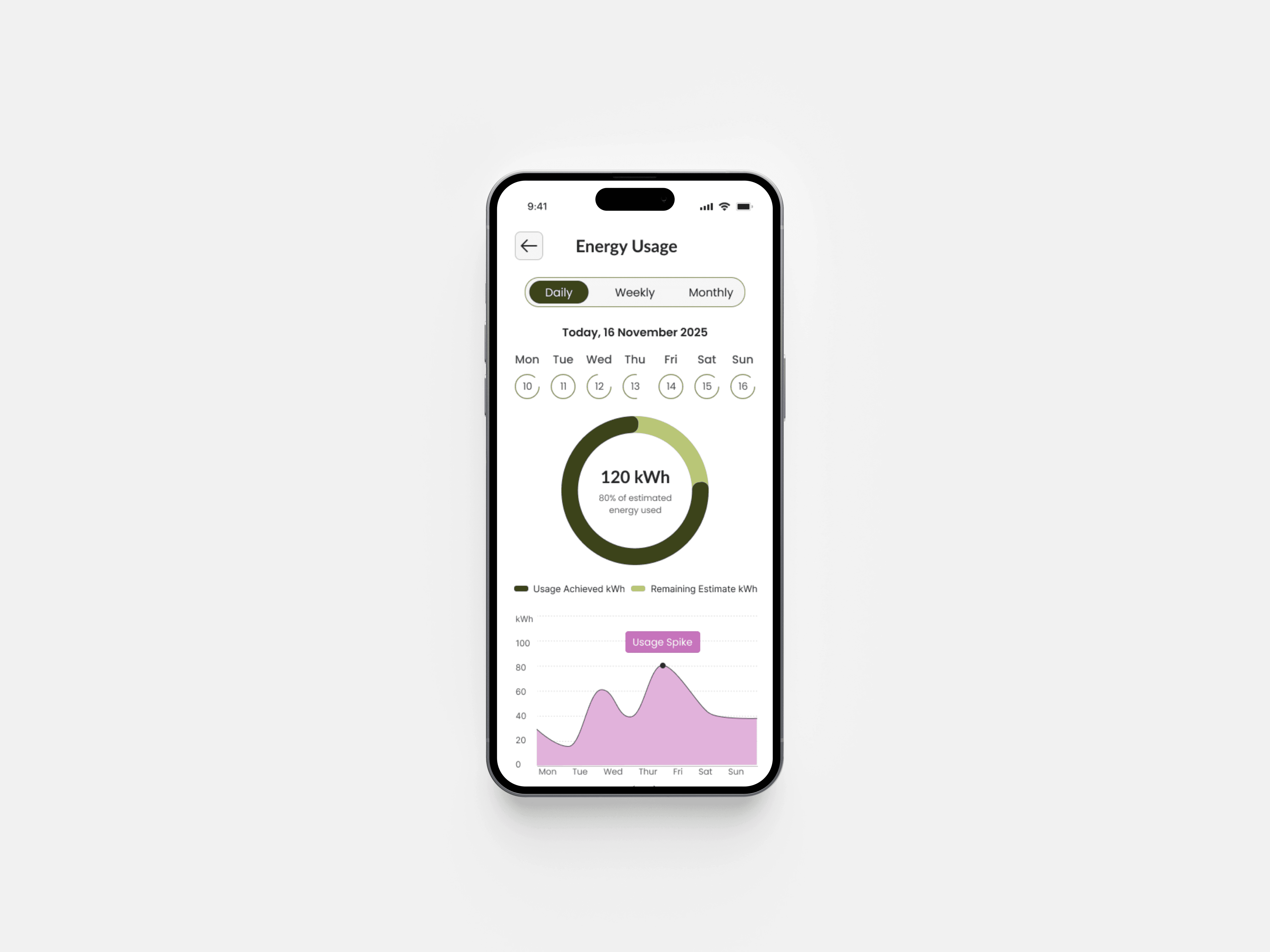
When you want to go deeper
For users ready to investigate, the breakdown view surfaces consumption by time of day. This is where PowerWise shifts from passive tracker to active advisor, helping people spot the habits that are quietly costing them the most.
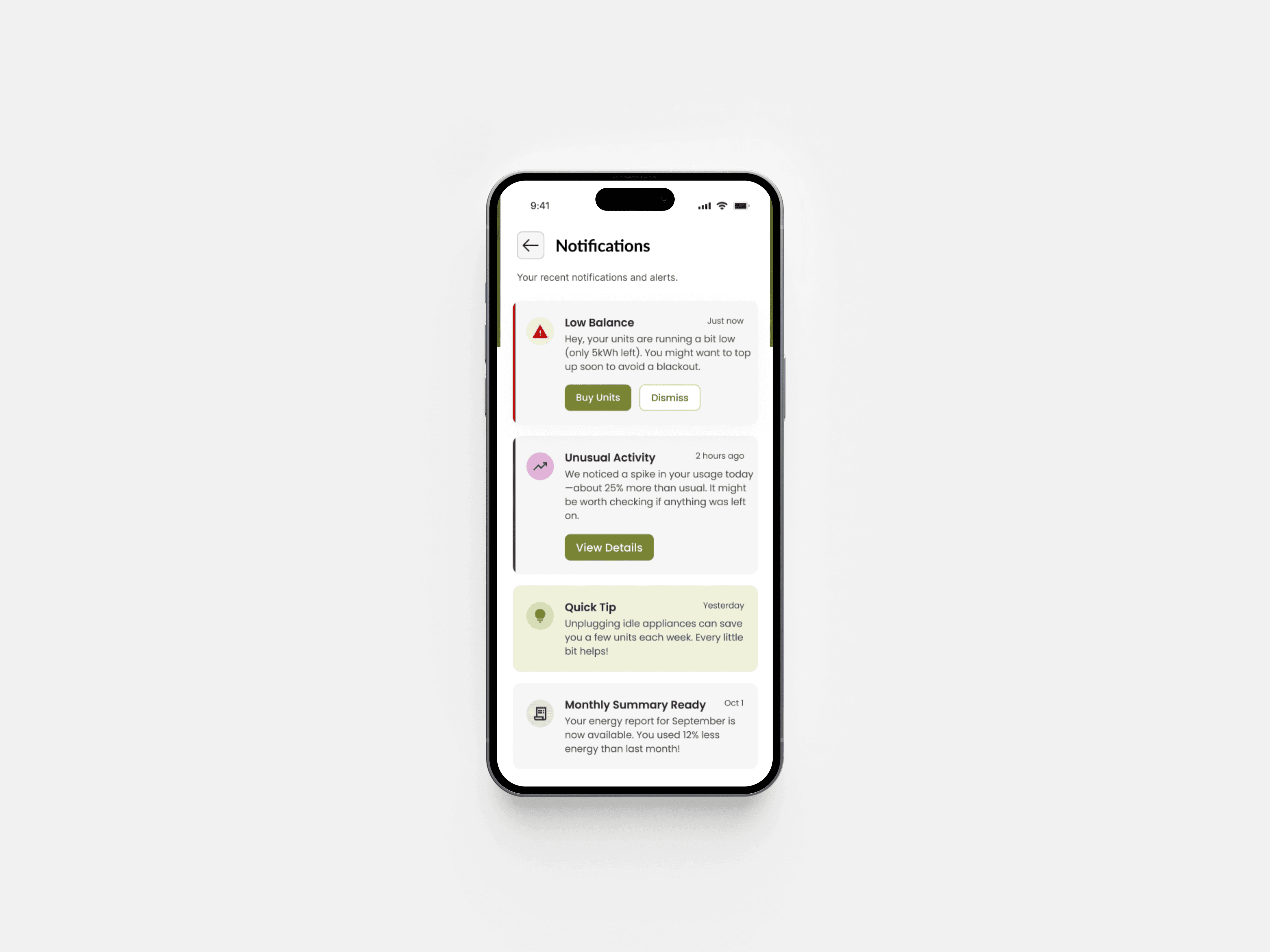
Alerts that actually land
When usage crosses a threshold, the app responds in plain language, not a raw number, not a system code. A clear sentence that tells you what's happening and what to consider doing about it. Alerts written like a person wrote them are alerts people actually respond to.

Closing the loop
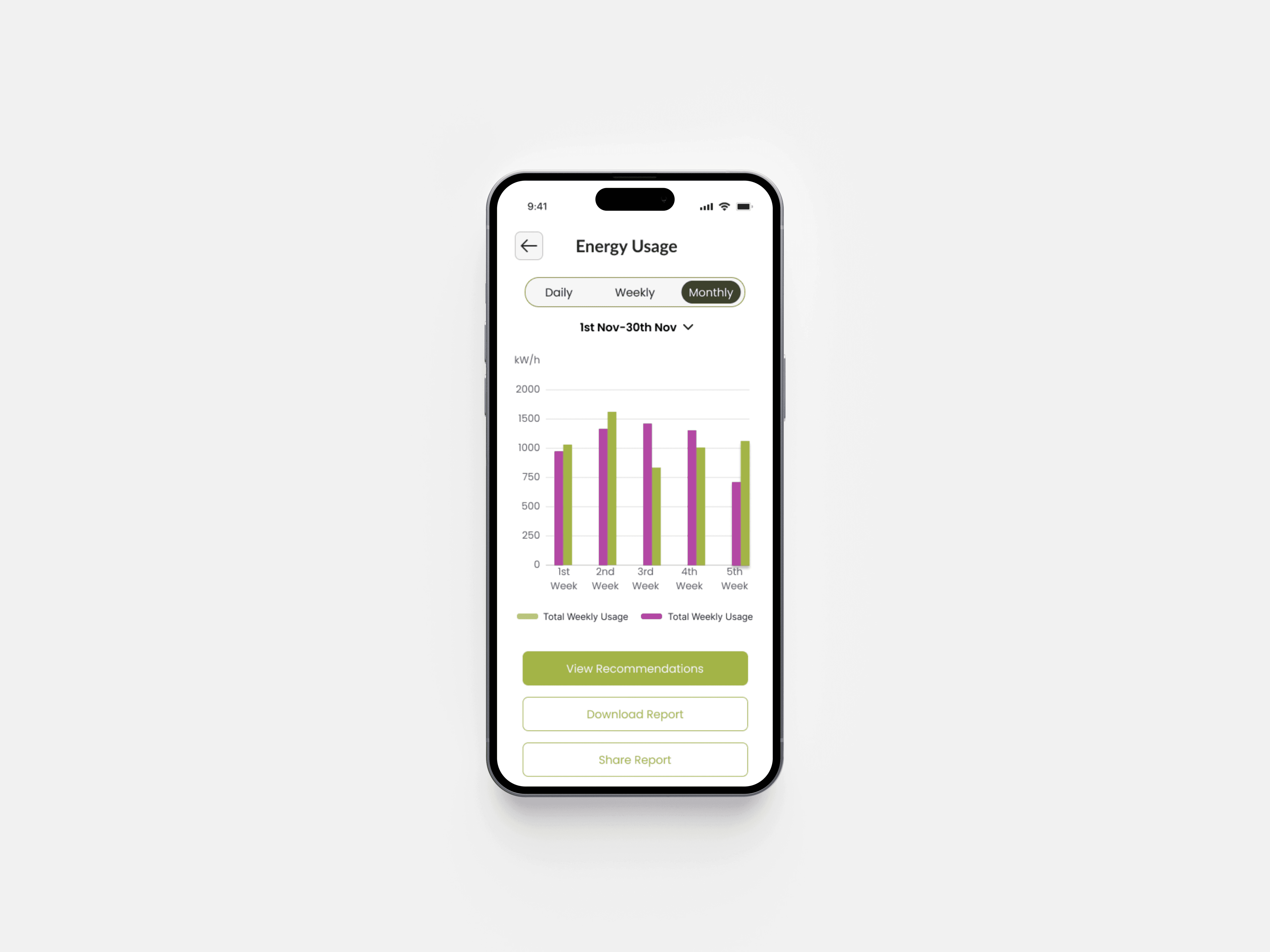
Progress has to be visible to be motivating. The bill history view lets users compare month over month and see whether their behavior changes are actually showing up in the numbers. It turns a once-dreaded screen into something worth checking.

Outcomes
PowerWise shifts the relationship with electricity from reactive to proactive. One daily tool instead of one monthly shock.
The design is built to scale, with room for appliance-level tracking, provider integration, and household comparison in future iterations. The core is tight. The ceiling is high.
Learnings
Narrowing scope early and holding that line was the most important decision on this project. Energy data gets complex fast. The research kept things honest, most users needed one thing done well, not ten done adequately.
The other lesson was how much emotional framing matters. PowerWise could have looked like a utility portal. Instead it was designed to feel personal, something that respects your time, speaks your language, and earns a place on your home screen. That intention shows up in every label, every alert, every moment of feedback the app gives.
Other Projects


HomeTrust
A platform offering verified listings, transparent pricing, and tenancy info to prevent disputes.
UI/UX Design
UX Research